



Retirement deferrals usually live outside the annual open enrollment flow, where no one connects them to the rest of the paycheck. For DC specialists, that’s this fall’s best plan sponsor conversation.
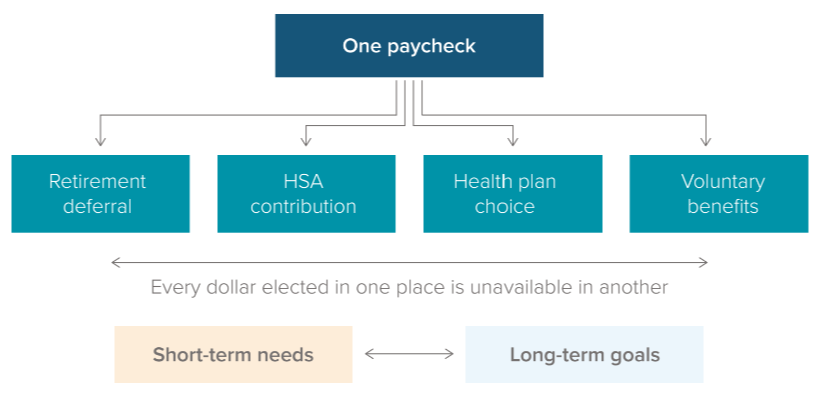
During open enrollment, employees may elect health coverage, weigh voluntary benefits, set HSA contributions, and adjust retirement deferrals. Plan sponsors typically present these as separate decisions. But employees don’t experience them that way—every election draws from the same paycheck, and each choice changes what’s left for the others.
In Voya Investment Management’s most recent Survey of the Retirement Landscape, 85% of participants said they were very or somewhat interested in help maximizing benefit dollars across retirement savings, HSAs, health insurance, and voluntary benefits.
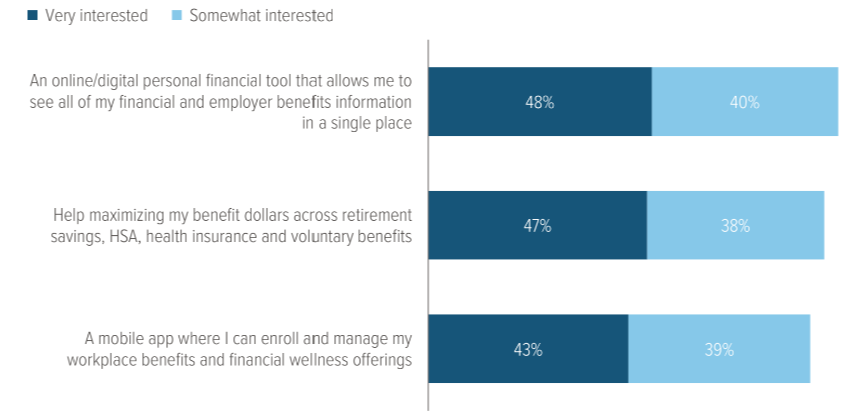
As of 04/01/25. Source: Voya IM.
Health coverage, HSA contributions, and voluntary benefits often sit in one enrollment portal; retirement deferrals live on a separate platform, outside the benefits enrollment flow entirely. The interactions between them, such as how a bigger HSA contribution affects room for a deferral increase, are often left for the employee to work out alone. In our survey, 88% of participants were very or somewhat interested in an online tool that shows all of their financial and employer benefits information in one place.
What the tradeoff looks like
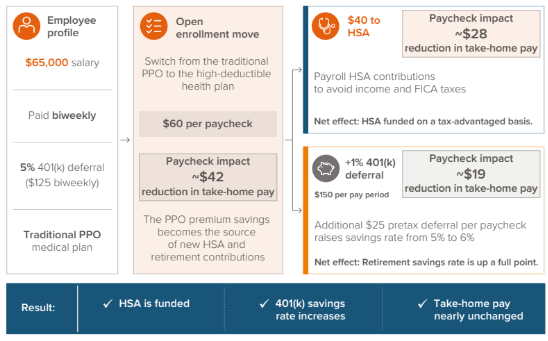
A hypothetical employee earns $65,000, is paid biweekly, and defers 5% into her 401(k). During open enrollment, she switches from the traditional PPO to the high-deductible plan, freeing $60 per paycheck in premiums. She directs $40 of it to her HSA. Because HSA contributions through payroll avoid both income and FICA taxes, that $40 reduces her take-home by roughly $28. The remaining premium savings covers a one-point deferral increase, about $25 pretax, costing her roughly $19 after tax. Her take-home pay is nearly unchanged, but her HSA is funded and her savings rate is up one full point.1
This sequence is often invisible in a standard enrollment experience. No screen ever shows the three numbers side by side.
The one-paycheck conversation for DC specialists
Retirement deferrals belong inside the open enrollment conversation, presented alongside health elections with their combined paycheck impact—not on a separate platform with a standalone reminder to save more. Some recordkeeping arrangements make that integration difficult. Where platforms can’t integrate, communications can.
Three questions tell a DC specialist how much help a sponsor needs:
1. Where does the deferral election live? Inside the enrollment flow, or on a platform the employee visits separately, if at all?
2. Does any communication show combined paycheck impact? Not benefit by benefit, but the net effect of all elections on a single check.
3. Who owns the tradeoff conversation? If the benefits team stops at health coverage and the retirement conversation happens elsewhere, nobody does.
Weak answers to any of the three are the DC specialist’s opening: propose an enrollment guide, webinar, or decision tree organized around paycheck math rather than the list of benefits.
Participants want this help broadly—and not just the ones behind on savings. 69% in our survey expressed interest in help getting back on track toward long-term goals after Covid, market volatility, and inflation. Open enrollment may be the only time each year they evaluate all of these decisions at once.
Sponsors are planning their fall enrollment communications now. To bring the one-paycheck conversation to your sponsor clients, contact us.