


Higher yields can lower bond prices at first, but over time, they can increase a portfolio’s potential return. Whether that helps or hurts you depends largely on when you’ll need the money.
If your bond holdings have lost value as U.S. Treasury yields have risen, you may be wondering what that means for your portfolio. The answer depends on why you own bonds and when you expect to need the money.
Treasury yields can affect corporate and municipal bond yields, but they are only part of the picture. Credit quality, taxes, and supply and demand also matter. These factors can add to or reduce the effect of rising Treasury yields on bond prices.
Higher yields can also increase a bond portfolio’s return potential over time. As bonds mature, that cash can be reinvested at higher yields, adding income that may help make up for some of the drop in the value of your existing bond holdings.
How higher yields affect bond prices and income
Exhibit 1 shows what could happen to a hypothetical five-year $100 bond if its yield rises from 3.0% to 5.0%. The bond’s value falls at first. Over time, reinvesting cash at the higher yield may help make up for some of that decline.
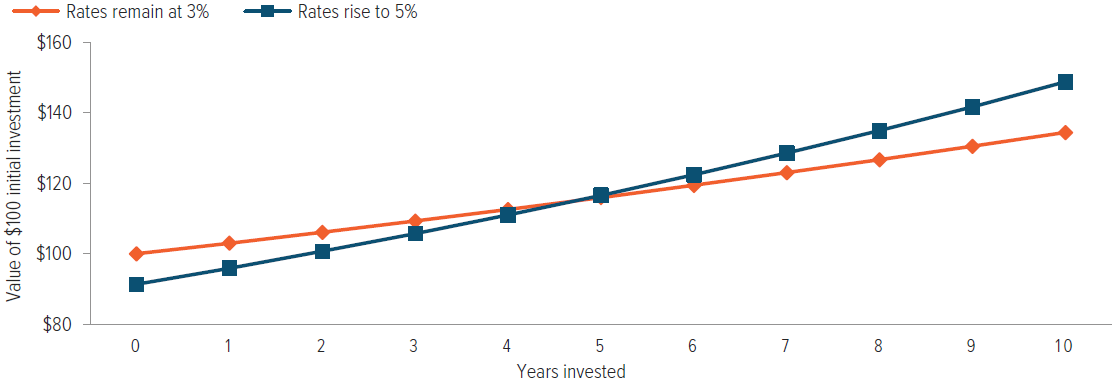
Source: Voya IM. For illustrative purposes only. This hypothetical example assumes a $100 bond with an initial yield of 3.0% and a five-year duration (a measure of how sensitive a bond or bond portfolio is to changes in interest rates). It assumes the portfolio’s yield rises by 2.0 percentage points, to 5.0%. The initial price decline is an estimate based on duration, and cash from the bonds is reinvested at the higher yield. The example also assumes that after five years, principal is returned and reinvested into another five-year bond yielding 5.0%. The example does not assume that all bond yields move by the same amount as U.S. Treasury yields. Actual results may differ. The example does not represent any investment and excludes fees, expenses, taxes, defaults, and further changes in yields. Past performance does not guarantee future results.
What higher yields mean for short- and long-term goals
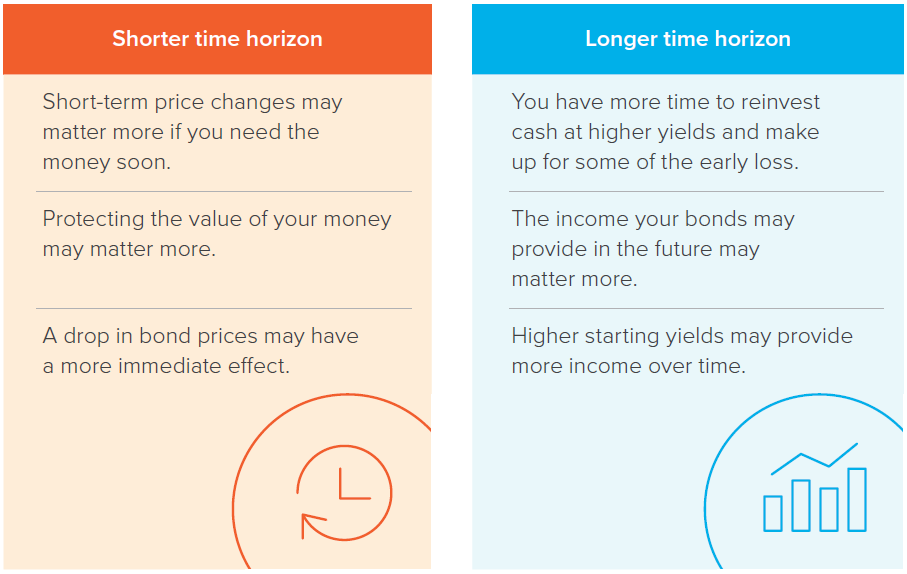
The same rise in yields can affect people differently based on their goals, income needs, and timelines. If you have more time, you can collect income and reinvest cash from your bonds at higher yields. This may help make up for an early drop in value. If you need the money sooner, you may have to sell before that can happen.
Keep the focus on your plan
Rather than trying to predict where yields will go next, look at whether your bond portfolio is still doing the job you need it to do. Consider discussing these questions with your financial advisor:
- When will I need this money?
- What role should bonds play in my portfolio?
- Am I taking the appropriate level of risk to earn income?
- Does my bond allocation still fit my goals and timeline?
Your financial professional can review how rising yields affect the bonds you own and whether your bond mix still fits your goals, income needs, and timeline. That review can show whether it makes sense to make a change, take advantage of higher yields or stay the course.
A note about risk: The principal risks are generally those attributable to bond investing. All investments in bonds are subject to market risks as well as issuer, credit, prepayment, extension, and other risks. The value of an investment is not guaranteed and will fluctuate. Market risk is the risk that securities may decline in value due to factors affecting the securities markets or particular industries. Individual bonds generally repay their face value at maturity if the issuer does not default, although some may be repaid earlier if they are called. Their market value may rise or fall before they are repaid. Generally, when interest rates rise, bond prices fall. Bonds with longer maturities tend to be more sensitive to changes in interest rates. Issuer risk is the risk that the value of a security may decline for reasons specific to the issuer, such as changes in its financial condition.